
What I Learned About Equanimity from Margaret Cullen
Conversation Highlights

In my recent conversation with Margaret Cullen on Compassion in a T-Shirt, I found myself rethinking or refining in my mind what equanimity really means.
Margaret Cullen is a licensed psychotherapist and one of the true pioneers of bringing mindfulness and compassion into mainstream psychology, healthcare, and community settings. Our conversation centres on Margaret’s beautiful new book, Quiet Strength.
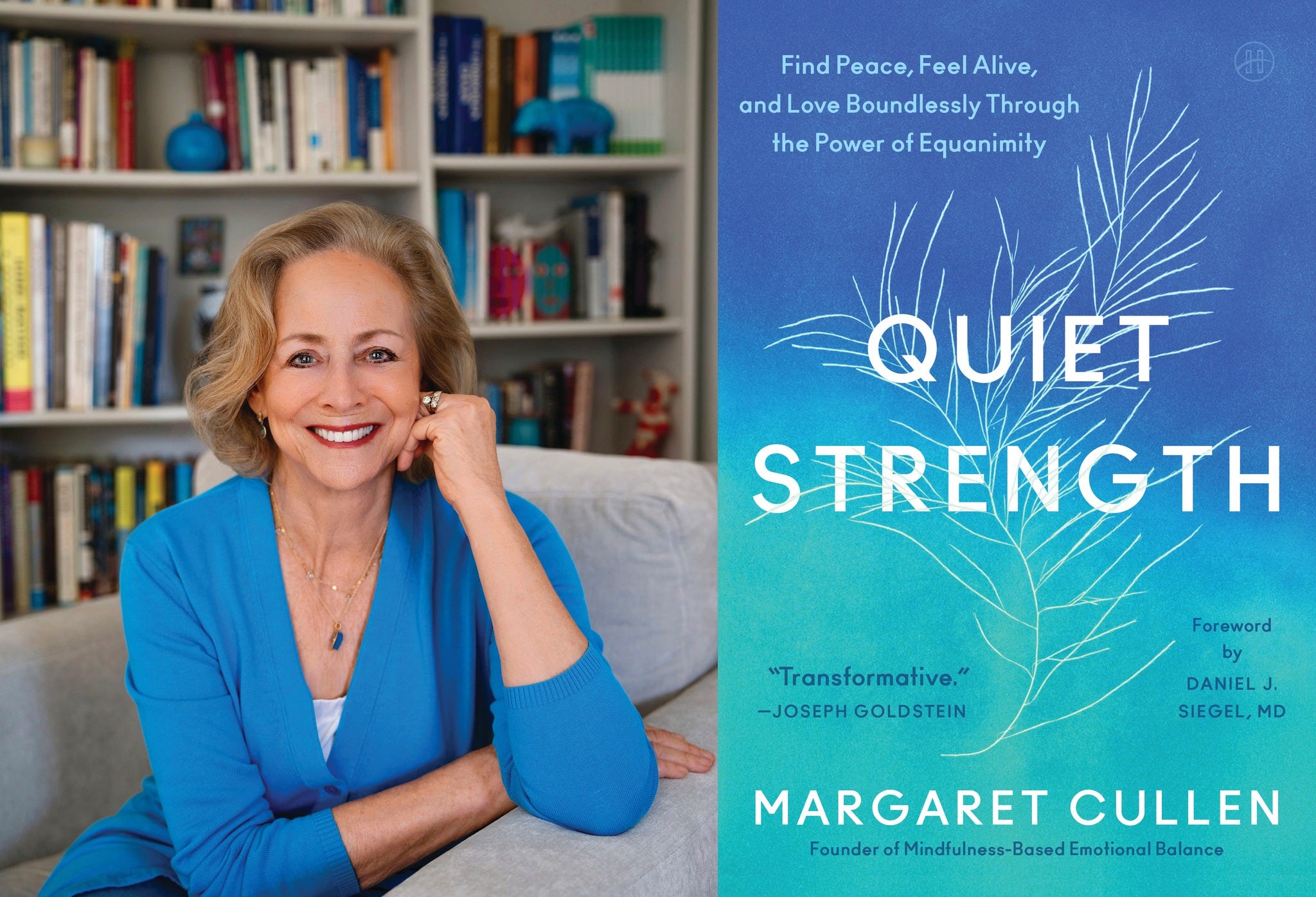
Like many people, I’ve sometimes associated equanimity with being calm all the time, and I have worried that this might mean having to be slightly detached. How can we engage with people, and life, if we are seeking a calmness that also requires separateness? But Margaret gently challenged that idea. Equanimity, she said, isn’t about not feeling. It’s about feeling fully without being hijacked by reactivity.
That distinction really stayed with me.
She described equanimity as widening our “window of tolerance” — being able to experience a broader range of emotions while staying relatively centred. And perhaps even more realistically, she spoke about recovery. We will lose our balance. That’s human. But equanimity helps us return to balance more quickly.
Another important insight was that equanimity doesn’t reduce emotion — it puts more space around it. We don’t have to suppress feelings or manipulate them. We allow them to rise and fall naturally, without adding struggle on top.
I was also struck by her emphasis on the body. Equanimity isn’t just a mindset. It’s something we can feel physically — a kind of inner geography. Through practices like yoga, mindfulness, and slowing down, we can interrupt rumination and hyperarousal, and rediscover balance from the bottom up.
Perhaps most powerful was her idea of “broken-hearted equanimity.” She shared how, during a painful period in her own life, she discovered that equanimity could hold heartbreak. Calm strength and deep feeling are not opposites.
Finally, I appreciated her reminder that equanimity supports compassion. It prevents us from tipping into overwhelm on the one hand or pity on the other. It helps us care deeply without being consumed.
In a world that feels reactive and polarised, that feels like quiet strength indeed.
You can watch or listen to my conversation with Margaret Cullen on Compassion in a T-Shirt. Find Margaret’s website here.